Local Guide · May 2026
Mobile Dog Grooming in San Antonio, TX: Costs, Breeds & Service Areas
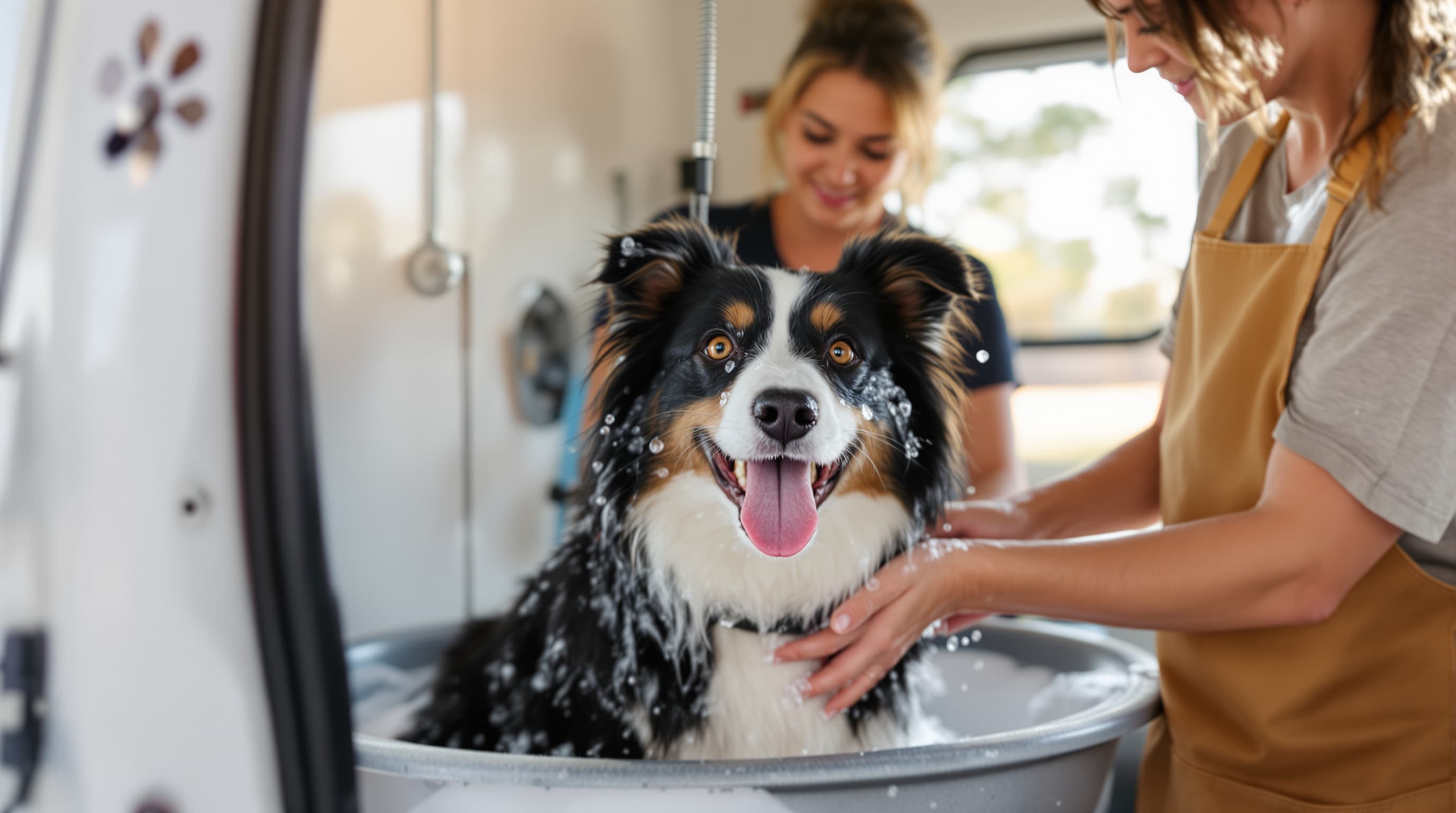
San Antonio is the largest city in the U.S. by land area that most people don't think of as a major metro — but at 1.5 million residents and growing, its pet service market is substantial. Mobile dog grooming fits San Antonio's sprawling geography particularly well, and the city's specific climate creates grooming needs that differ from Houston and Austin in ways worth understanding.
SA's hot and dry summers: different from Houston, different from Austin
San Antonio's summer climate is hot and relatively dry compared to Houston — the humidity that makes Houston dog coats mat aggressively is less severe here. Average summer humidity in San Antonio runs 10–15% lower than Houston, which means coat drying is faster and mat formation is somewhat less aggressive for long-coat and curly-coat breeds. This doesn't mean grooming frequency can be skipped — San Antonio summers still hit 100°F regularly in July and August — but owners here have slightly more margin than their Houston counterparts.
The Hill Country influence west of the city brings a drier microclimate for dogs in Helotes, Leon Springs, and the 1604/151 corridor. Dogs in those areas experience conditions closer to a semi-arid climate, which means less humidity-related matting but more dust and outdoor debris accumulation in coats.
Popular breeds in San Antonio
San Antonio's breed mix reflects its geographic and cultural position between South Texas ranch country and a major urban core. German Shepherds are the most commonly groomed double-coat breed in the market — they're popular both as family dogs and as working dogs in the military households that make up a significant share of the population. Their dense double coat needs regular de-shedding treatment (not shaving) and benefits from professional grooming every 6–8 weeks.
Border Collies are common in the active households of Stone Oak, Alamo Heights, and the northern suburbs. Their long, double coat sheds heavily twice per year and mats if not brushed consistently between appointments. Professional de-shedding treatment in spring and fall keeps indoor shedding manageable.
Maltese and other small companion breeds are popular throughout San Antonio's established neighborhoods — Alamo Heights, Olmos Park, Terrell Hills — and in retirement communities throughout the south and west sides. These breeds need professional grooming every 4–6 weeks.
Doodle breeds (Goldendoodles, Labradoodles) have arrived in force in San Antonio's newer master-planned communities. The same curly-coat management issues that apply everywhere apply here — every 6–8 weeks minimum, shorter summer cuts recommended.
Military families at JBSA: a significant and specific demographic
Joint Base San Antonio is the largest military installation in the country by population, encompassing Lackland AFB, Randolph AFB, Fort Sam Houston, and associated facilities. Military families represent a meaningful portion of San Antonio's dog-owning population — and they have specific characteristics as pet service customers.
Military families move frequently — PCS (Permanent Change of Station) moves happen every 2–3 years on average. When they arrive in San Antonio, they need to establish new service relationships quickly: vets, groomers, daycares. Mobile grooming is particularly appealing to this demographic because it eliminates the "where is everything" problem that comes with a new city. A groomer who comes to their home simplifies the logistics of a move significantly.
On-post housing at JBSA requires vendors to have base access credentials. Most mobile groomers serving San Antonio operate off-post. Military families in base housing typically schedule grooming at an off-post address — a family member's house, a friend's driveway — or contact their housing office about vendor access options.
Neighborhoods served
Stone Oak and Far North SA
One of San Antonio's most active suburban markets. High-density residential with Labs, Goldens, and doodles. Mobile grooming runs frequently in this corridor.
Alamo Heights and Terrell Hills
Established, affluent neighborhoods with a mix of small and large breeds. Strong demand for consistent, quality mobile grooming.
Helotes and Leon Springs
West of the 1604 loop, Hill Country-adjacent. More outdoor dogs and working breeds. Mobile grooming appointments work well given the low salon density in this area.
Converse and Universal City
East side suburbs near Randolph AFB. Dense military family population. Good mobile grooming coverage given proximity to the base.
Boerne (via Helotes corridor)
Some San Antonio-based mobile groomers extend service to Boerne and the I-10 west corridor. Call ahead to confirm.
Pricing in San Antonio vs. Austin and Houston in 2026
San Antonio is the most affordable of the three major Texas mobile grooming markets. Austin has become a premium market driven by tech-sector growth; Houston's prices sit in the middle. San Antonio pricing reflects the city's overall cost of living — professional quality at rates that are 10–20% below Austin and 5–10% below Houston for equivalent services.
| Breed Size | San Antonio | Austin | Houston |
|---|---|---|---|
| Small (under 20 lbs) | $60–$80 | $70–$90 | $65–$85 |
| Medium (20–50 lbs) | $80–$105 | $90–$120 | $80–$110 |
| Large (50–80 lbs) | $100–$130 | $115–$155 | $100–$135 |
| Doodles & XL | $125–$165 | $145–$195 | $130–$175 |
Full groom rates (bath, blow-dry, breed cut, nail trim, ear cleaning). De-shedding treatment adds $20–$35 in all three markets. 2026 estimates.
More resources for San Antonio dog owners
Get Started
Book your San Antonio groom
We serve all of Bexar County. Professional mobile grooming at your door.